How to build a powerful serve today
Where serve speed actually comes from — and how to find yours.
Read article
Ryan Walker
Performance analyst · 19 January 2026
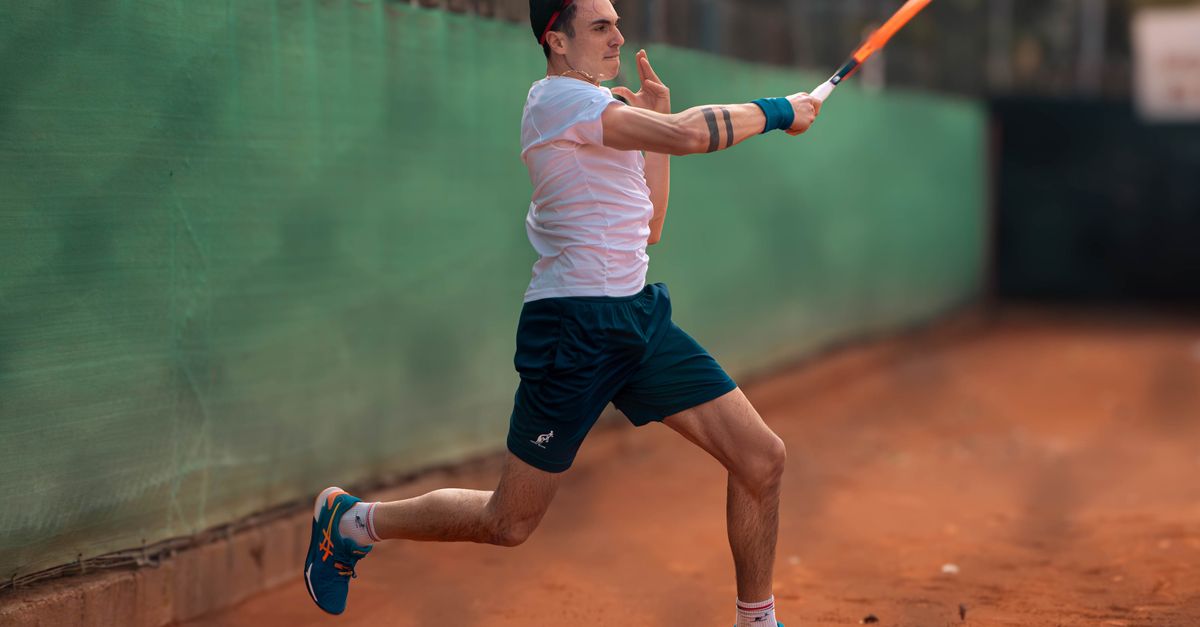
Watch a player whose technique looks excellent in a warm-up and falls apart in a match, and you are almost always watching a footwork problem rather than a racket problem. If the feet arrive late, the arm compensates.
Just before the opponent strikes the ball, hop lightly and land on the balls of both feet. That small landing releases the stretch reflex in your legs and lets you push in either direction immediately. Players who skip it are effectively starting from standing still.
The first step is explosive and directional; the adjustment steps are small and precise. Most club players over-run the ball, then hit off their back foot because they are still moving. Arrive early with the big step, then use small steps to fine-tune the distance.
“Good players look like they have more time. They do not. They simply arrived earlier.”

Olivia Brooks
Technique Specialist
After every shot, push back toward a position that bisects the opponent's possible angles — usually slightly across from the ball rather than the geometric centre of the court. Recovery is a habit, and it is the first thing to decay when a player is tired.
Feed a ball to the forehand corner, then one to the backhand corner, and repeat for ninety seconds. Score yourself on how often you split step before the feed, arrive before the bounce and recover before the next ball. Two rounds, three times a week.
Join a footwork blockWhere serve speed actually comes from — and how to find yours.
Read articleThree checks that beat brand loyalty every time.
Read article